The Southern Shade Blog
How to Remove Pollen, Pet Hair & Allergens from Your Blinds and Shades
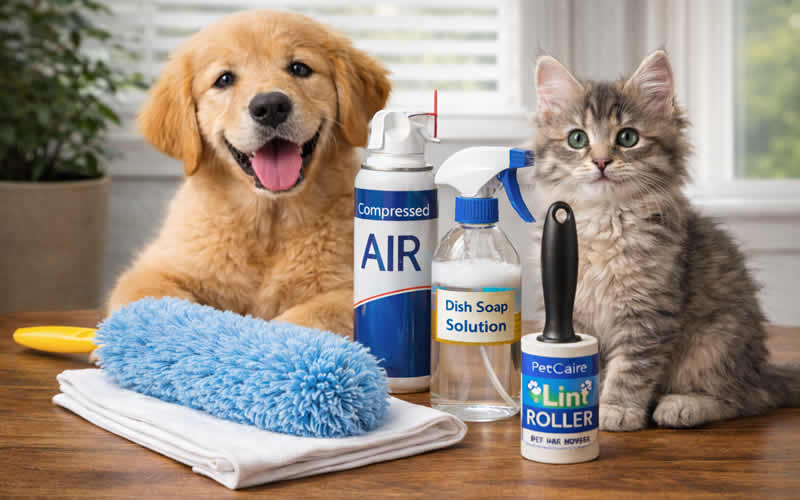
Practical cleaning tips for North Carolina homes
If you live in North Carolina, you already know: pollen season isn’t subtle. Cars turn yellow. Porches get coated. And yes—your blinds and shades collect it all.
Add pets to the mix (and we love our pets here), and you’ve got pet hair, dander, and allergens settling into window treatments week after week.
The good news? Most custom blinds and shades can be safely cleaned at home—if you use the right method for the material. The wrong cleaner or too much moisture can cause warping, staining, or damage.
Below is a practical, material-by-material guide for removing pollen, pet hair, and allergens from the types of window treatments we install at Prestigious Window Fashions.
Why Pollen & Pet Dander Build Up on Window Treatments
Blinds and shades sit right where air circulates most—near windows, HVAC vents, and open screens. In North Carolina:
- Spring tree pollen is heavy and airborne.
- Summer humidity causes particles to cling.
- Fall ragweed adds another layer.
- Indoor pets shed year-round.
- Window treatments act like horizontal catch points—especially blinds and plantation shutters with louvers.
Routine maintenance prevents buildup and reduces allergens circulating through the home.
Cleaning by Product Type
Plantation Shutters (Wood or Composite)
Best for: Allergy-prone homes because they’re easy to wipe clean.
Weekly Maintenance (High Pollen Season)
- Close the louvers.
- Use a microfiber cloth or microfiber duster.
- Wipe each slat from hinge to outer edge.
- Microfiber cloths are widely available (including on Amazon) and trap dust rather than spreading it.
For heavier buildup:
- Lightly dampen the cloth with water.
- Immediately dry with a second cloth.
- Avoid:
- Spray cleaners directly on shutters.
- Soaking wood shutters.
- Harsh chemical cleaners.
- If you have composite shutters, light moisture is generally safe—but never saturate.
Wood Blinds & Faux Wood Blinds
Blinds collect pollen along each slat.
Best Method for Pollen Removal
- Close blinds fully.
- Use a microfiber blind duster (available online and locally).
- Work top to bottom.
For pet hair:
A vacuum with a brush attachment on low suction works well. Keep the nozzle slightly above the slat to avoid bending.
Important:
- Real wood blinds should never be soaked.
- Avoid ammonia-based cleaners.
- Avoid excessive moisture.
- Faux wood blinds tolerate light damp wiping better than real wood.
Roller Shades & Solar Shades
These are popular in North Carolina for UV control and energy efficiency. Because they are fabric-based, treat them differently.
Regular Cleaning:
- Use a vacuum with upholstery attachment.
- Vacuum top to bottom while shade is fully extended.
For light spots:
- Use a clean cloth with mild soap and water.
- Blot gently. Do not scrub aggressively.
- Avoid:
- Saturating fabric.
- Steam cleaning.
- Harsh stain removers.
- Solar shades are designed to filter sunlight and are typically durable—but over-wetting can affect the fabric.
These are great for insulation—especially helpful during hot North Carolina summers—but they can trap dust inside the cells.
Safe Cleaning Tips:
- Use compressed air (short bursts) to blow out interior dust.
- Vacuum lightly with brush attachment.
- Spot clean only if manufacturer allows.
- Never:
- Submerge in water.
- Force moisture into the honeycomb structure.
- If pollen buildup is heavy inside cells, professional ultrasonic cleaning may be necessary.
How Often Should You Clean in North Carolina?
Consistent light cleaning prevents heavy buildup, which is harder to remove safely.
During peak pollen season (March–May): Light dusting once per week.
Homes with pets: Weekly quick dusting. Monthly deeper vacuuming.
Lower-allergen months: Monthly maintenance is usually enough.
Products That Work (Available locally in NC or online in shops like Amazon)
Safe, commonly available tools:
- Microfiber cloths
- Microfiber blind dusters
- Vacuum with brush attachment\
- Mild dish soap
- Compressed air canisters
- No specialty chemicals required.
If a cleaning product requires strong solvents, steam, or soaking—it’s not appropriate for custom window treatments.
When DIY Isn’t Enough
Call a professional if you notice:
- Warped louvers
- Staining that won’t lift
- Fabric discoloration
- Mechanical issues with motorization
- Broken tilt rods or cords
- Heavy buildup inside honeycomb shades may require professional ultrasonic cleaning.
Choosing Window Treatments for Allergy-Prone Homes
If pollen and pet dander are a constant issue, consider:
- Plantation shutters (easiest to clean)
- Faux wood blinds (moisture resistant)
- Smooth roller shades (less texture to trap allergens)
Homes in wooded or high-pollen areas often benefit from hard-surface treatments over heavy drapery.
Final Thoughts
- Dust regularly.
- Avoid excessive moisture.
- Use gentle tools.
- Don’t overcomplicate it.
If you’re considering upgrading to something easier to maintain—or you’re not sure what type of material you have—we’re happy to take a look and give practical advice.
ARTICLES
- Are Motorized Shades Worth It? What to Know Before Adding Them to Your Home
- North Carolina’s 2026 Triangle Parade of Homes: 3 Window Design Details Worth Watching
- What We’re Looking Forward to at High Point Market Fall 2026
- Why Designers Are Layering Window Treatments in 2026
- Best Window Treatments for West-Facing Windows in North Carolina Homes
- Best Window Treatments for North Carolina Heat Waves
- Keep Pollen Out: Best Window Treatments for NC Allergy Season
- Window Treatment Considerations for Large Windows and Sliding Glass Doors
- How to Remove Pollen, Pet Hair & Allergens from Your Blinds and Shades
- Selling Your Home? This One Window Upgrade Could Help It Sell Faster (and for More)
- Window Treatment Trends Defining Homes Right Now
- Childproofing Your Home Starts at the Windows
- The True Cost of Cheap Window Treatments (and Why Quality Saves You Money)
- How to Cozy Up Your Windows for Fall (and Still Enjoy the View)
- Top Window Fashions of 2025 for North Carolina Homes
- Protecting Your Windows During Hurricane Season in North Carolina
- Imagineering Comfort & Style: Window Treatments for Your New Disney Asteria Home in Pittsboro
- Top 7 Window Treatment Mistakes to Avoid in Every Room of Your Home
- Asheville NC Named a Top 2025 Travel Destination—What It Means for Your Window Treatments
- Honeycomb Shades: The Cozy, Energy-Saving Secret Homeowners Love
- How to Clean and Maintain Your Natural Wood Blinds the Right Way
- Why Faux Wood Blinds Might Just Be Your Windows’ New Best Friend
- Save Energy Year-Round with the Right Window Treatments