The Southern Shade Blog
Why Designers Are Layering Window Treatments in 2026
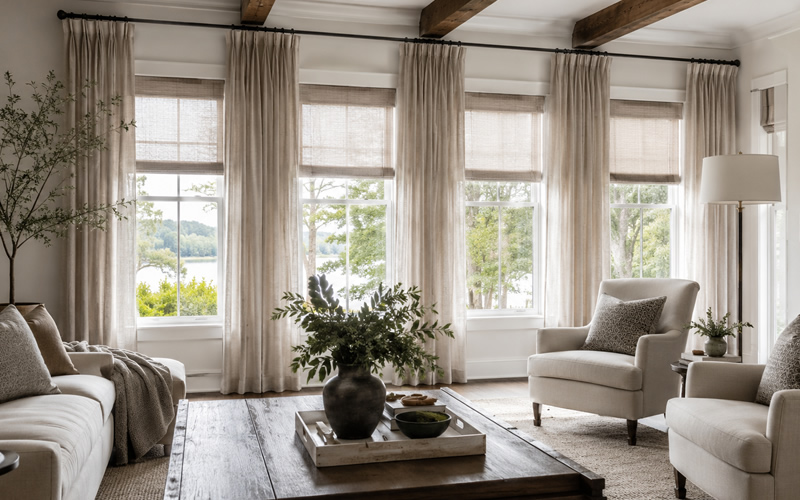
One window treatment can solve a problem. Two can transform the entire room.
That is the thinking behind layered window treatments, one of the most noticeable interior design trends of 2026. Sometimes called double-dressed windows, the look combines two complementary treatments—such as Roman shades with drapery or roller shades with decorative panels—to create more depth, texture, and visual interest.
Interior designers have used this technique for years, but it is receiving renewed attention as homeowners move away from rooms that feel overly plain or perfectly matched. Today’s interiors are warmer, more personal, and more layered. The windows are finally being invited to participate.
And frankly, it is about time. They have been standing there doing most of the work.
Why Layered Window Treatments Feel So Well Designed
The appeal of layered window treatments goes well beyond adding more fabric to a window.
Designers use layers to improve the balance and proportions of a room. A shade fits closely to the window and creates structure. Drapery extends beyond the frame, softening the surrounding wall and drawing the eye upward.
Together, the two treatments can make a window appear taller, wider, and more substantial.
Layering also allows designers to combine materials that contribute different qualities to the room. A woven shade introduces natural texture. A tailored Roman shade adds clean lines. Linen-style drapery brings softness and movement.
The result feels collected rather than purchased as a matching set.
Well-designed shades and drapery can also connect the windows to other elements in the room, including:
- Upholstery
- Rugs
- Flooring
- Wall color
- Wood finishes
- Artwork and accessories
That is why professional window treatment design considers much more than the window itself. The goal is to make the treatment feel as though it belongs in the entire room.
Roman Shades with Drapery: Tailored Meets Soft
Of all the layered window treatment ideas, Roman shades with drapery may be the most versatile.
Roman shades create a clean, tailored foundation within the window. Full-length drapery adds softness, height, and a more finished appearance around it.
This combination works particularly well in living rooms, dining rooms, bedrooms, and home offices. It can feel formal or relaxed depending on the materials selected.
For a calm, sophisticated design, pair a neutral Roman shade with drapery in a similar color but a different texture. For example, a smooth ivory shade can work beautifully with warm linen-style panels.
For more personality, keep the Roman shade simple and use the drapery to introduce pattern or color.
A good designer rule is to let one layer take the lead. If the drapery has a strong pattern, the shade should be quieter. If the Roman shade has a distinctive texture or print, the surrounding panels should support it rather than compete with it.
When both layers demand to be the center of attention, the window can begin to look like it dressed for two separate events.
Explore our Roman shades to see how a tailored shade can become the foundation of a layered design.
Woven Shades with Drapery: Natural and Collected
Texture is playing a major role in interior design trends for 2026, and woven shades fit naturally into that movement.
Woven materials add warmth and subtle variation that smooth fabrics cannot always provide. Paired with soft drapery, they create a relaxed, thoughtfully designed look that works especially well in North Carolina homes.
This combination complements:
- Natural wood flooring
- Warm neutral interiors
- Coastal-inspired rooms
- Transitional furnishings
- Farmhouse details
- Homes surrounded by wooded views
A woven shade with light linen-style panels can make a room feel comfortable without looking casual or unfinished.
The two layers should relate to each other, but they do not need to match. In fact, the slight contrast between a textured shade and softer drapery is what gives the design its depth.
Some woven shades allow a significant amount of light to pass through, so privacy should also be considered. Depending on the room, a liner may be needed to provide privacy or room darkening after sunset.
This is one reason samples should be evaluated inside the home. A material that looks softly filtered during the day may become surprisingly transparent when the lights come on at night.
Windows can be a little sneaky that way.
Roller or Sheer Shades with Decorative Panels
For a cleaner, more contemporary version of the double-dressed window trend, designers often combine roller or sheer shades with decorative side panels.
The shade handles everyday light control and privacy, while the fabric panels soften the room and frame the window.
This pairing is particularly effective in rooms where a practical shade is needed but a purely minimal treatment might feel too stark.
A roller shade can provide a simple backdrop for patterned or textured panels. A sheer shade can filter sunlight while the drapery adds visual weight and elegance around the window.
The side panels do not always need to close. In many designer window treatments, they remain stationary and serve primarily as a framing element.
This makes the window look wider and more substantial while allowing the shade to perform the daily work.
The combination is especially useful in:
- Living rooms with televisions
- Home offices with computer glare
- Dining rooms
- Large open-concept spaces
- Rooms with strong afternoon sunlight
The key is balance. The shade provides clean lines. The fabric prevents the room from feeling cold or overly bare.
How to Layer Window Treatments Like a Designer
Learning how to layer window treatments is less about following a strict formula and more about getting the proportions and materials right.
Let One Layer Be the Focus
Choose whether the shade or the drapery will be the visual feature. The second layer should support it.
Mix Textures Instead of Forcing a Match
A smooth shade can be paired with linen, woven, or softly patterned drapery. The treatments should coordinate without looking identical.
Repeat a Color Already in the Room
Use a tone found in the rug, upholstery, artwork, or flooring. This helps the window treatment feel connected to the overall design.
Mount Drapery High and Wide
When the room allows it, mounting drapery above and beyond the window trim can make the window appear taller and wider.
This should be done thoughtfully. Rod placement depends on ceiling height, surrounding wall space, furniture placement, and the dimensions of the window.
Use Enough Fabric
Drapery panels that are too narrow can look skimpy, even when the fabric itself is beautiful. Proper fullness creates the graceful folds associated with custom window treatments.
Plan for Both Treatments to Operate
The shade needs enough space to raise and lower properly. The drapery hardware must project far enough from the wall to clear the inner treatment.
A layered window should look effortless, although achieving that effortless appearance usually involves quite a bit of measuring.
Why an In-Home Design Consultation Matters
Colors, fabrics, and textures do not exist in isolation.
A fabric that appears beige in a showroom may look gray beside your flooring, gold in afternoon sunlight, or slightly green against your wall color.
Natural light can also change dramatically depending on whether the window faces north, south, east, or west. That affects both the appearance of the material and the type of light control the room needs.
An in-home consultation allows the design to be considered alongside:
- Your furniture and finishes
- The room’s natural light
- Window size and placement
- Ceiling height
- Privacy requirements
- Glare and heat
- The way the room is used
Professional guidance is especially valuable when layering treatments on large windows, sliding doors, unusually shaped windows, or several windows that need to coordinate within an open floor plan.
Prestigious Window Fashions can bring samples directly into your home, help you compare fabrics and materials in the actual room, and make sure every layer is measured and installed properly.
Explore our full selection of custom window treatments, including shades, blinds, shutters, and designer options for homes throughout New Hill, Raleigh, Durham, Cary, Apex, and surrounding North Carolina communities.
Give Your Windows the Designer-Finished Look
Layered window treatments may be a major design trend in 2026, but the reasons designers rely on them are timeless.
They add depth. They improve proportion. They soften architecture. They connect the windows to the rest of the room. And they provide more flexibility for managing sunlight, privacy, and comfort.
The difference between a window that is simply covered and one that feels professionally designed often comes down to the details.
Prestigious Window Fashions offers custom window treatments, professional installation, and free in-home design consultations throughout the Raleigh-Durham area.
Schedule your free in-home consultation and let us help you create a layered window design that looks beautiful, functions properly, and feels completely at home in your space.
ARTICLES
- Are Motorized Shades Worth It? What to Know Before Adding Them to Your Home
- North Carolina’s 2026 Triangle Parade of Homes: 3 Window Design Details Worth Watching
- What We’re Looking Forward to at High Point Market Fall 2026
- Why Designers Are Layering Window Treatments in 2026
- Best Window Treatments for West-Facing Windows in North Carolina Homes
- Best Window Treatments for North Carolina Heat Waves
- Keep Pollen Out: Best Window Treatments for NC Allergy Season
- Window Treatment Considerations for Large Windows and Sliding Glass Doors
- How to Remove Pollen, Pet Hair & Allergens from Your Blinds and Shades
- Selling Your Home? This One Window Upgrade Could Help It Sell Faster (and for More)
- Window Treatment Trends Defining Homes Right Now
- Childproofing Your Home Starts at the Windows
- The True Cost of Cheap Window Treatments (and Why Quality Saves You Money)
- How to Cozy Up Your Windows for Fall (and Still Enjoy the View)
- Top Window Fashions of 2025 for North Carolina Homes
- Protecting Your Windows During Hurricane Season in North Carolina
- Imagineering Comfort & Style: Window Treatments for Your New Disney Asteria Home in Pittsboro
- Top 7 Window Treatment Mistakes to Avoid in Every Room of Your Home
- Asheville NC Named a Top 2025 Travel Destination—What It Means for Your Window Treatments
- Honeycomb Shades: The Cozy, Energy-Saving Secret Homeowners Love
- How to Clean and Maintain Your Natural Wood Blinds the Right Way
- Why Faux Wood Blinds Might Just Be Your Windows’ New Best Friend
- Save Energy Year-Round with the Right Window Treatments